Quinceañera: Bailando en las nubes de las tradiciones/ Dancing in the clouds of traditions
Curator: Johnathan Heath Lambe and Dr. Yesenia Navarrete Hunter
Yakima Valley Museum
Yakima, WA
September 2023 Summer 2025

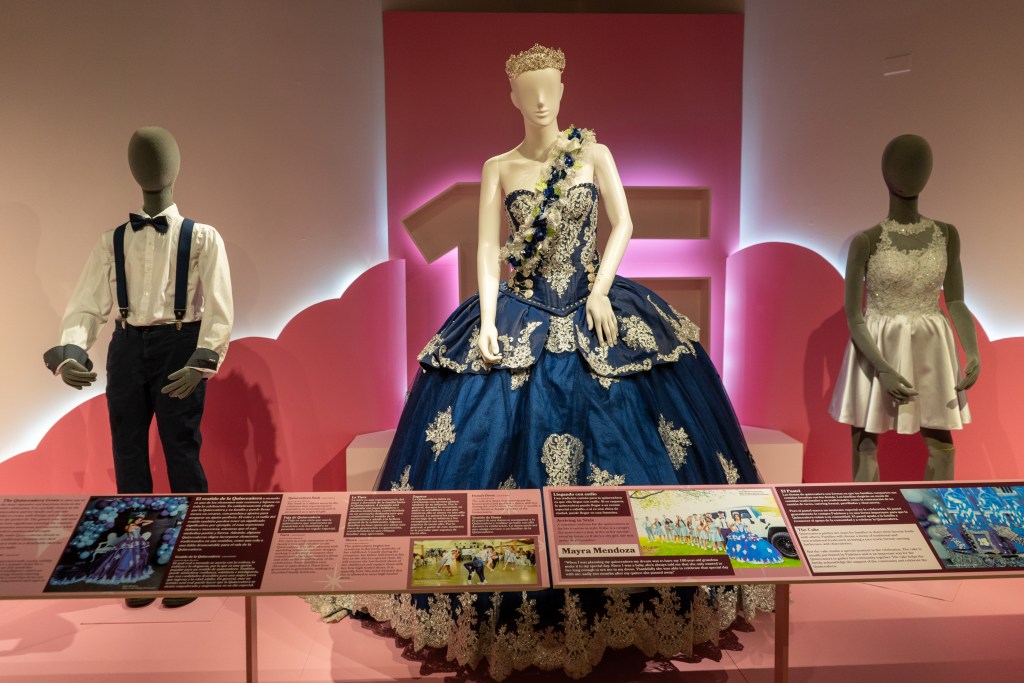
The Quinceañera: Bailando en las nubes de las tradiciones/ Dancing in the clouds of traditions exhibit outlines the basics of a coming-of-age celebration for 15 year-old girls in Mexico and other Latin American countries. The exhibit explores Latine community spaces in Central Washington, showcasing a variety of dresses, accessories, and objects from quinceañera celebrations for local, young women and their families from the 1950s to 2022.
Ten quinceañera dresses of various colors, textures, and styles embody the ways young women have chosen to honor their families, religious beliefs, and cultural values. The dresses offer glimpses into the lives of each young woman who wore them, along with their memories, personalities, and style. Some dresses were purchased from local shops while others were handmade by the quinceañeras mother or grandmother. Clothing worn by the quinceañeras maids, chamberlains, and other guests are also on display. The women detail the choices they made, how they represent who they are, and what shaped them, including events beyond their control, such as the COVID-19 pandemic.
Throughout the exhibit, generations of Yakima Valley residents share stories of how celebrations have brought people together. The quinceañeras describe their parents, family members, and friends whose contributions resulted in a memorable event. Bilingual wall panels list their names, hometowns, and occupations. Many highlight stories of migrant and seasonal farmworker families who practice traditions brought from Mexico and adapt them in new places. The exhibit also offers examples of celebrations that took place in what some might consider to be surprising venues. As a result, they gained significance to communities that might not otherwise be thought of as occupants in those spaces.
As mentioned previously, the exhibit highlights people who make their living in a variety of places cultivating and harvesting seasonal crops and highlights the pride people have in their work. A more important focus is placed on the relationships, traditions, and values they maintain. The nuanced examples of quinceañeras that keep traditions from Mexico and showcase pride in their local community and work, such as by incorporating apples and other local produce into their festivities, are laudable. Furthermore, they excel in their portrayals of joy within a sizeable community that has not been widely represented in public spaces and whose contributions are too often limited to their labor.
The relationships between women are the most fascinating primarily, but not exclusively those between daughters and mothers, whether they are continuing a family tradition or celebrating for the first time. Through generations of quinceañera celebrations, newcomers, more established families, and a mix of both have shaped communities and imbued spaces with meanings. Families with mixed heritage have relied on the celebration to bridge cultural differences and combine them into new, unifying traditions through their photos, objects, and stories.
In addition to learning about various families in the valley and their celebrations then and now, one of the joys of this exhibit is its ability to spark further conversation among visitors. Visiting the exhibit with my mother resulted in a lengthy discussion about her life as a fifteen-year-old in Mexico City. I heard new stories and learned about how she, her mom, and sister adapted the celebration to fit their budget while still being careful to fulfill aspects that were important to them at the time.
I hope this exhibit can be viewed as a possible template for other communities to showcase their celebrations while highlighting aspects that haven’t been talked about enough, perhaps including the growing popularity of quinceañeros.