
Cathy Salazar, Cedar Weaver
Cathy Salazar and her daughter and apprentice Gloria Salazar live in La Push, Washington. Enrolled members of the Quileute tribe, Cathy is teaching Gloria the tradition of cedar weaving that has been an important part of their family’s history for generations. “I’ve been able to teach her the way that I wish I would have been taught when I was first learning how to weave, and it’s an opportunity for us to have this one-on-one time together specifically to focus on weaving and learning about the different techniques that we can explore,” says Cathy.
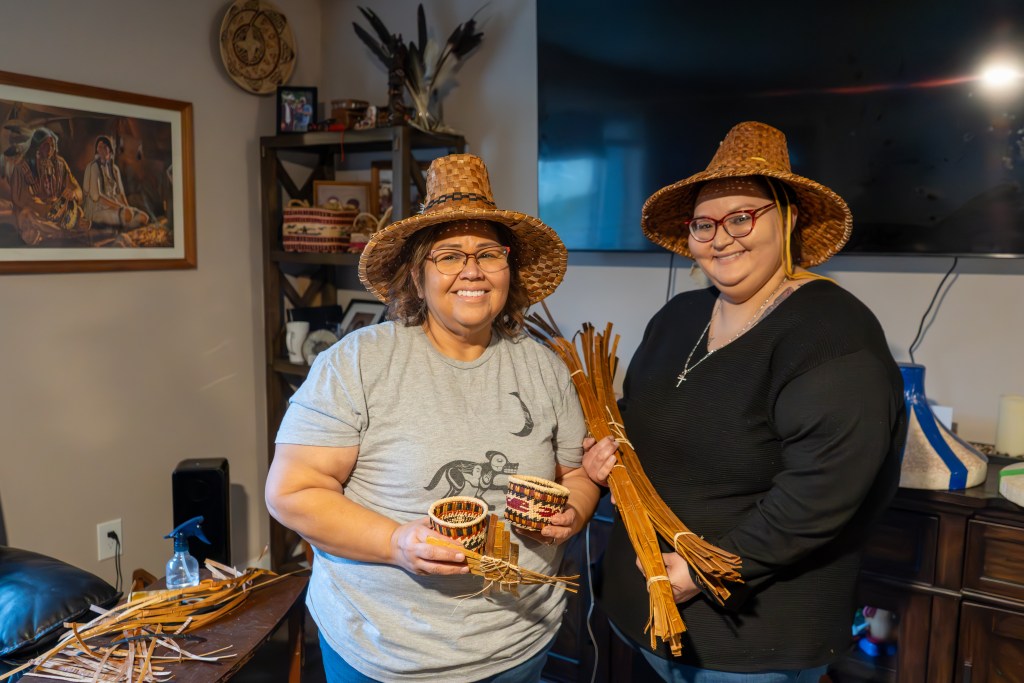
(L-R) Cathy and Gloria Salazar
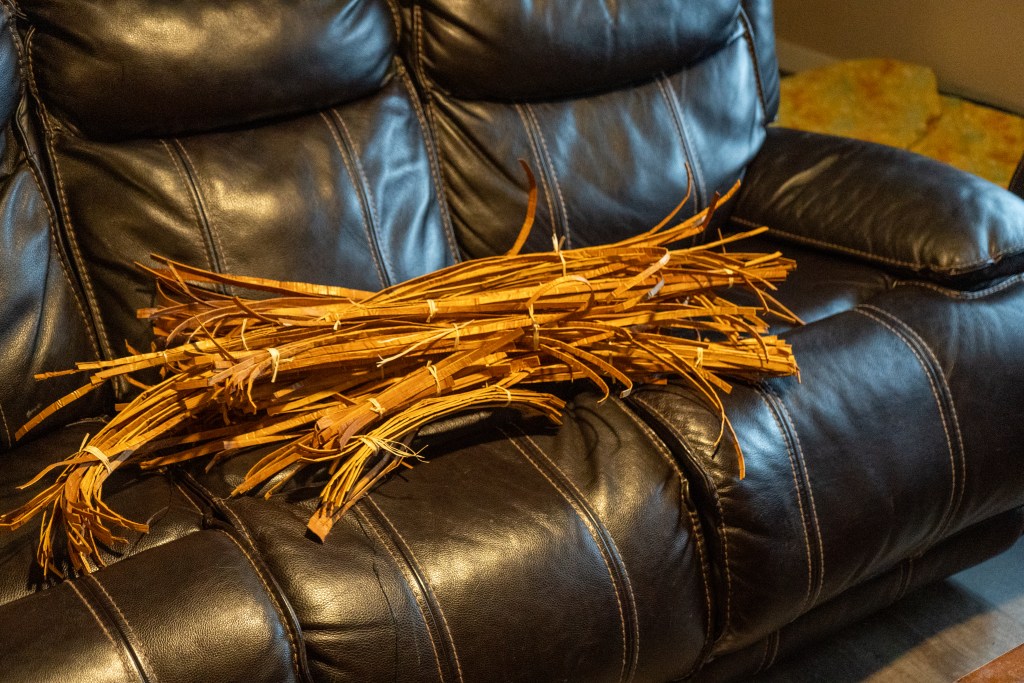
The cedar weaving process begins with the harvesting of the bark. In the spring, in partnership with landowners in the area, Cathy goes to the forests with small machetes and axes to harvest pieces of bark about six to ten inches on each side. After cutting the bark, she begins pulling it up the whole length of the tree until it reaches a natural point where the bark breaks off. Cedar weavers only harvest up to one third of a tree and then do not touch it again. The harvested bark is then carried out of the woods, and the outer bark is separated from the inner bark. The inner bark is kept, dried outside in the sun for several days, and then bundled and stored for about a year. Once the bundles are completely dry, the weavers soak them in warm water for a few hours and then split them into the different widths and thickness that will be used to weave baskets or other items including hats, headbands, earrings, regalia, dolls and more.
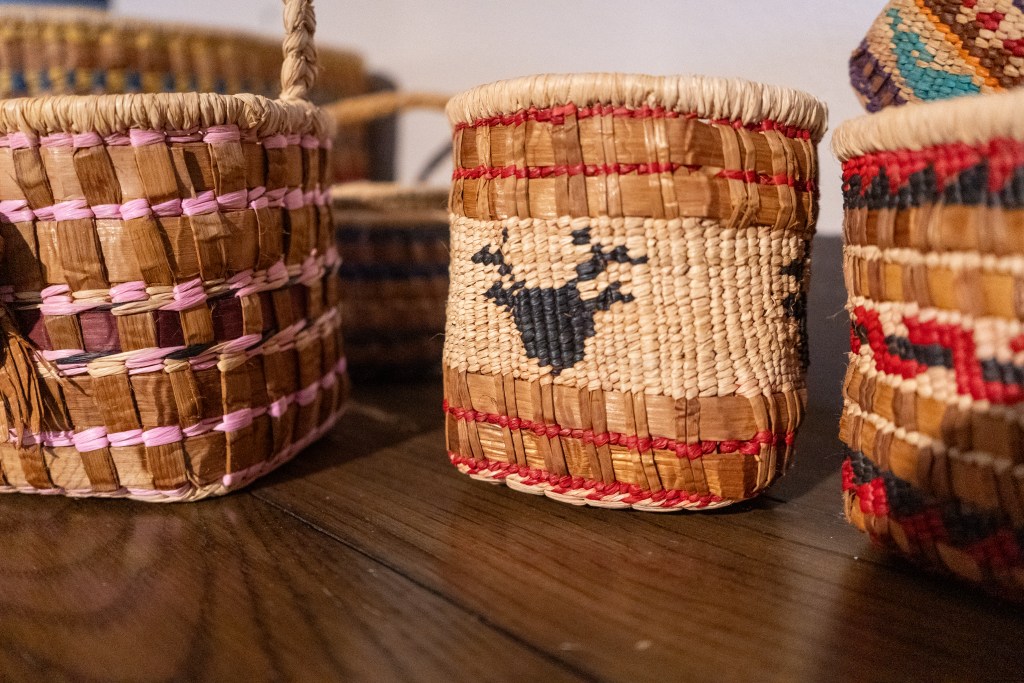
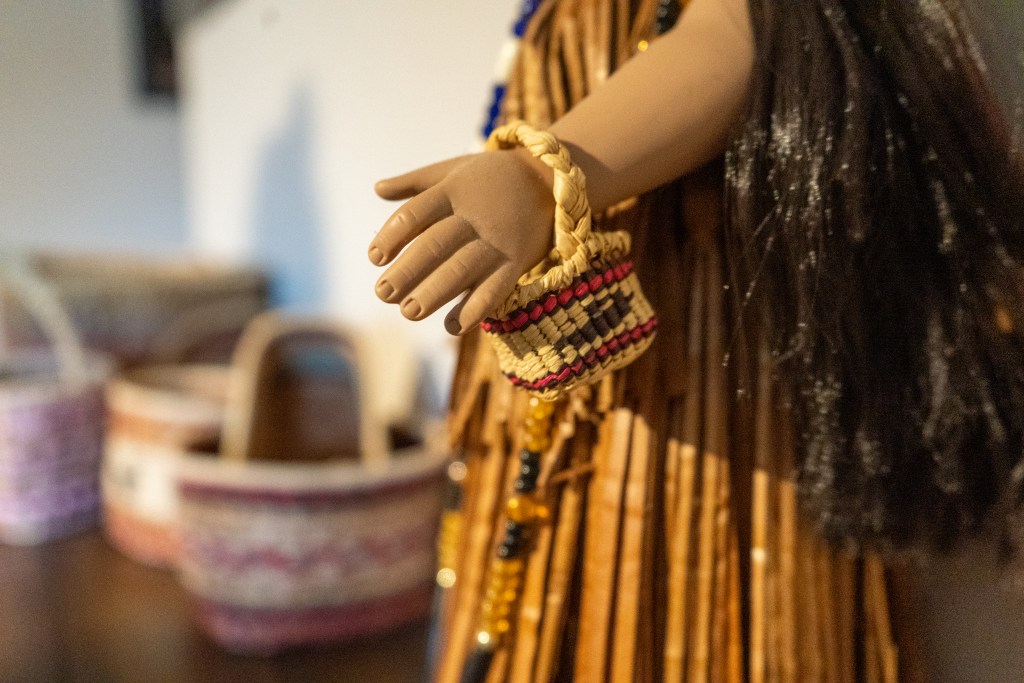
While most weavers in the Salazar family began learning the tradition by weaving basket bottoms, Gloria started with weaving hats and headbands for her name giving ceremony, “Since we come from a family of basket weavers, I felt like it was very important to me to want to learn,” Gloria says, “I helped with stripping the cedar and actually making the headbands and hats and finding the learning curve.” Though the challenge of weaving hats and headbands was intimidating to Gloria at first, they have become her favorite pieces to work on and wear, “I’m more of a cultural dancer, and so having the right regalia and just something that’s more important to you and that more people are going to see… and making you feel comfortable and beautiful too in your own skin, in your own culture, in being proud of where you came from.”
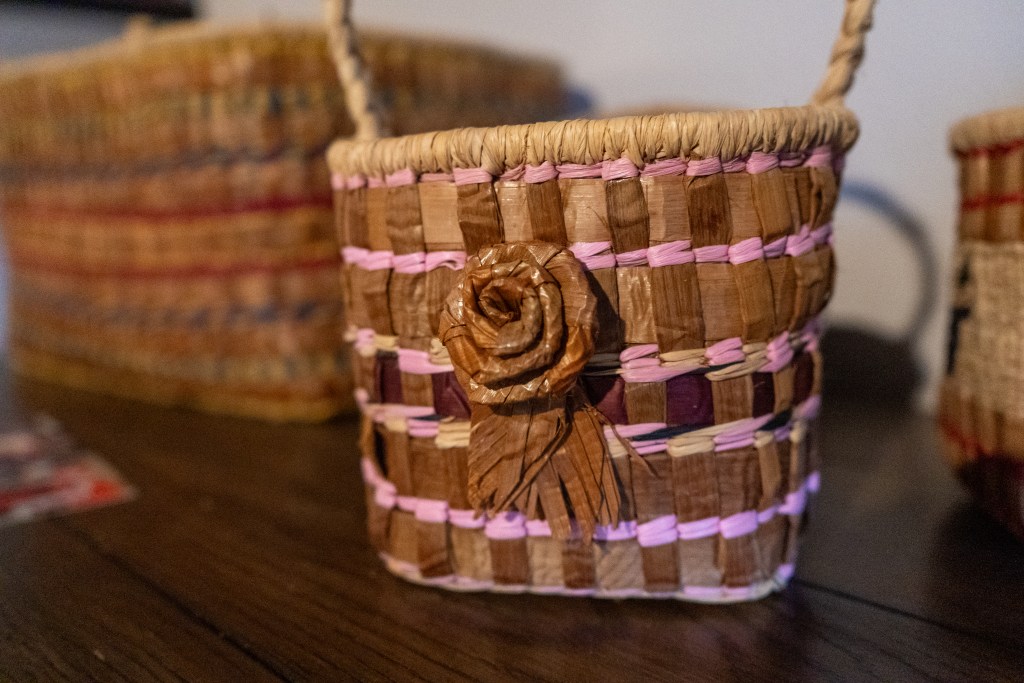
Gloria, like most cedar weavers, is developing her own signature style as she continues weaving hats and headbands. One can see a signature design or technique incorporated in most of the woven baskets that help to identify the artist who made the piece. Cathy’s signature incorporates symmetry between the top and bottom of her baskets and traditional colors of red, black, and natural raffia. It is also very common to see elements like decorative cedar roses incorporated on Quileute baskets and regalia to reflect the wild Nootka roses that grow in the area.
As Cathy passes down her knowledge to her daughter, she ensures that Gloria understands the entire weaving process from start to finish. From harvesting the cedar, to processing it and weaving with it, Cathy’s expertise that she gathered from years of experience is shared with the next generation. Gloria feels honored to be continuing the tradition of her ancestors, recalling fond memories of watching her grandmother weave baskets. To now be learning from her mother underscores the generational importance of the craft, “What I enjoy from learning from my mom is just having that extra time with her and knowing that it’s going to be passed down for generations to come because there’s not many master weavers anymore, and learning from a master weaver that’s amazing, and to call her mom at the end of the day is pretty special.”