
Fresia Valdivia, Peruvian Retablos
“A retablo tells a story without really telling you, but it does tell you,” says Natalia Oblitas. “It’s like a game.” She learned retablo-making at a young age from her mother, Master Artist Fresia Valdivia.

Originally from northern Peru, Fresia’s retablos primarily depict typical Peruvian women and rural life. She learned from the Eulalia López Antay, the wife of a renown retablo-maker. “There was a time I made the clay from scratch,” she recalls, but when doing so in the US proved to be cost-prohibitive, Fresia adapted. She uses recycled materials to make llamas, and crafts people from store-bought clay and scraps of cloth she orders from Peru.
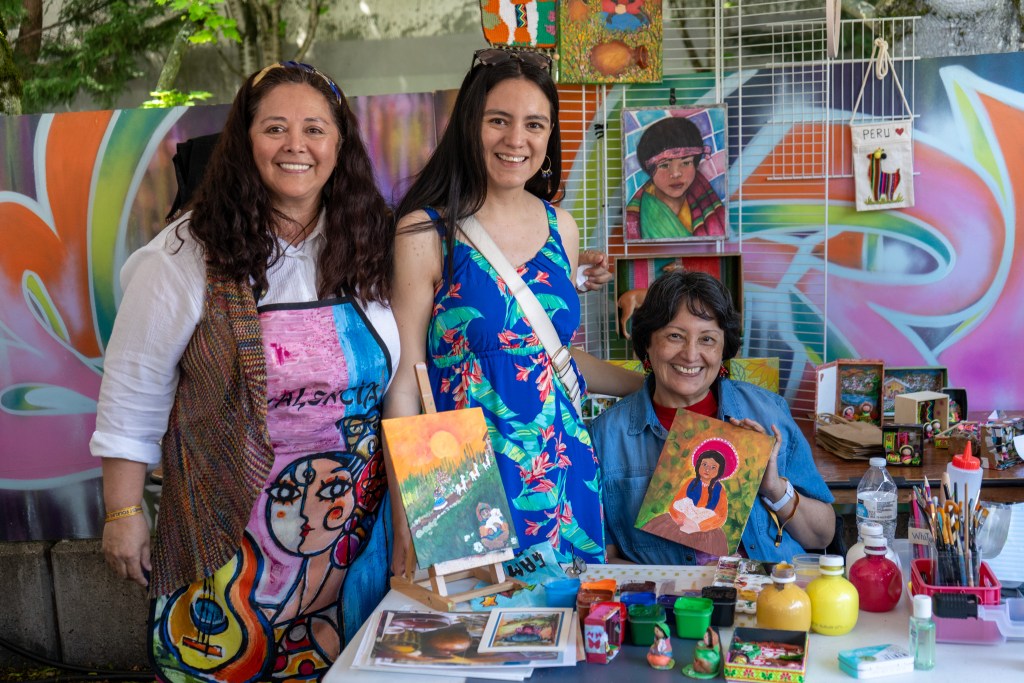
Natalia and Magaly Bailon, both Fresia’s apprentices, moved from Peru to the US in their late teens. They often seek ways of reconnecting with their heritage and were thrilled to do it through retablos. Natalia’s retablo depicts her family in a traditional Peruvian market with items that represent an increasingly globalized community. Natalia is now a mother herself and hopes to pass the storytelling tradition on to her own daughter. For Magaly, whose husband and son play Peruvian folk music, representing her family in a retablo meant fashioning instruments like the zampoña (pan pipes) and the cajón (drums) out of recycled materials and clay.

“We have a voice through our art. It is very important to recognize this,” Fresia says.

At the 2025 Northwest Folklife Festival, the trio showcased their work and offered a llama-decorating activity to share about Peru and their stories with the public.