
Janice Jainga-Lonergan, Raven’s Tail Weaver
“I learned so much not just about weaving, but about so much sympathy of culture and traditions and the proper ways of doing things .” says Dawn Smith, one of two apprentices to master Raven’s Tail weaver, Janice Jainga-Lonergan.
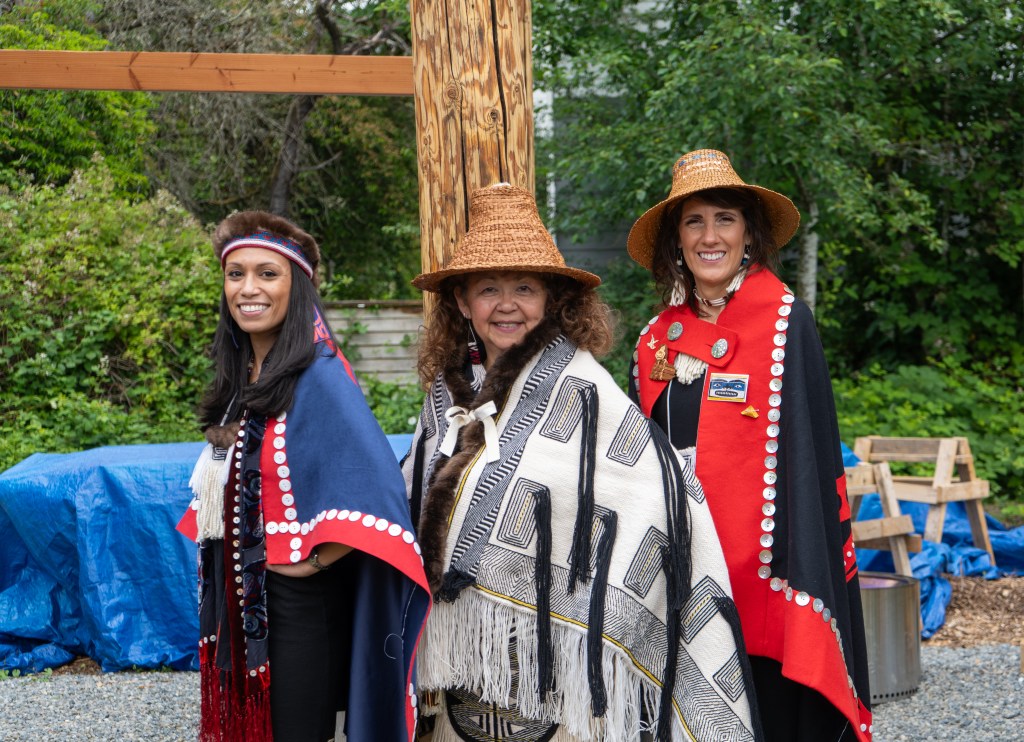
(L-R) Ashley Schmidt, Janice Jainga-Lonergan, and Dawn Smith at the Celebration of Raven’s Tail Weavings in June of 2025.
Raven’s Tail weaving is one of the traditional wool weavings of the Pacific Northwest Coast Indigenous tribes of present-day Alaska and throughout the diaspora including the Ts’msyen tribe that Janice, Dawn, and Ashley Schmidt all belong to. Raven’s Tail weaving uses geometric shapes and patterns to tell stories and provide landmarks for important histories of the tribes. Using wool spun by hand on the weaver’s thigh, the women weave in a freeform fashion using tabletop looms to create pouches, headbands, and other larger pieces of regalia. The practice went nearly extinct several decades ago but was revived by Cheryl Samuel whose work and resources on Chilkat and Raven’s Tail weaving kept the tradition alive. Janice is honored to continue Cheryl’s work of teaching the endangered practice, “My passion is to teach others and to make sure that then they know enough and if they’re willing to teach others to just keep that tradition going and not to let it die out ever again.”
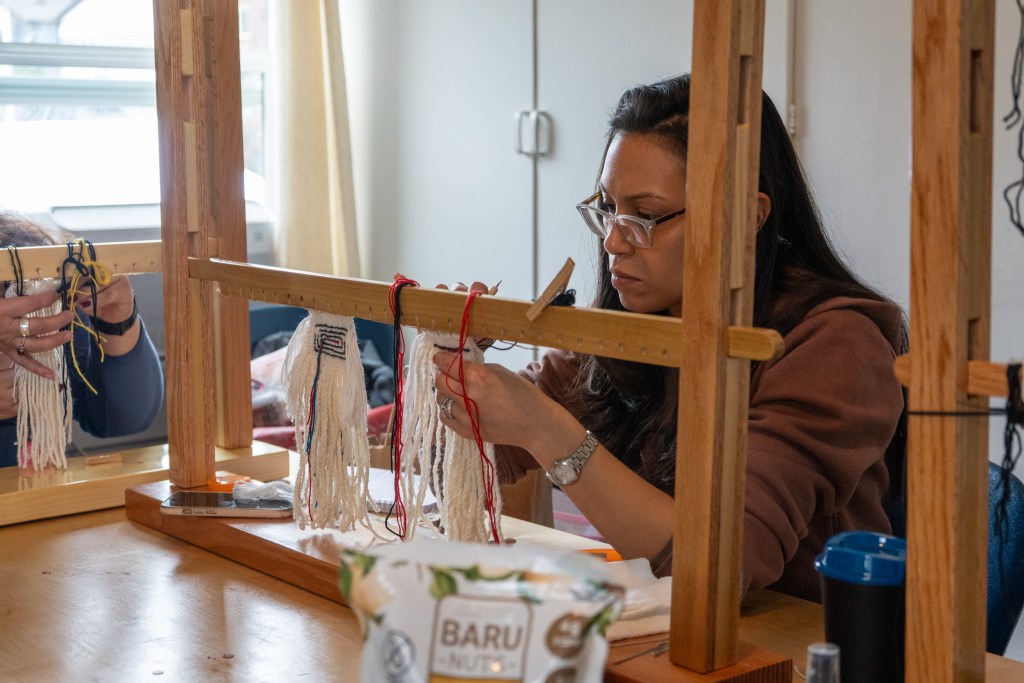

Janice begins by teaching the apprentices the challenging practice of spinning their own wool for the warp. Though the process requires much trial and error, the weavers resolve to carry only positive energy as they weave, knowing their intentions and spirits are deeply intertwined with the work. As they advanced, they began with making small pouches doing a classic box-within-a box design and moved on to create headbands. Once each piece is finished, it is important for the weaver or recipient, particularly a member of the Ts’msyen tribe, to “dance the piece to life”. This ancient practice of dancing the pieces to life is a crucial element of the tradition, Janice says, “You’re adding that extra power to this piece which is an actual living piece and being. It’s just not an item.” The tradition of Raven’s Tail weaving in its entirety is not just an art form but a practice of giving life to the art and respecting the deep spiritual and historical connections each piece carries.
Janice’s goal of passing on the tradition of Raven’s Tail weaving and sharing her knowledge with her Indigenous relatives extends especially to those of the younger generations. Janice shares about weaving headbands for her grandsons, protection pieces that have the “Shaman Eyes” design. She asked her grandsons what colors they wanted to be used in the pieces, “well, I want blue for Captain America and Captain Marvel…I want red for Spider-Man and Iron Man,” the boys said. By finding connections to the interests of the younger generations Janice encourages them to be more invested in the traditional practices of their heritage and to understand the creativity and ingenuity of their ancestors. “We need to teach them,” says Janice, “I don’t want them to have any other feelings like we had. We have the trauma and we knew that trauma, but I only want my kids and grandkids going forward to just have a sense of pride about it.”
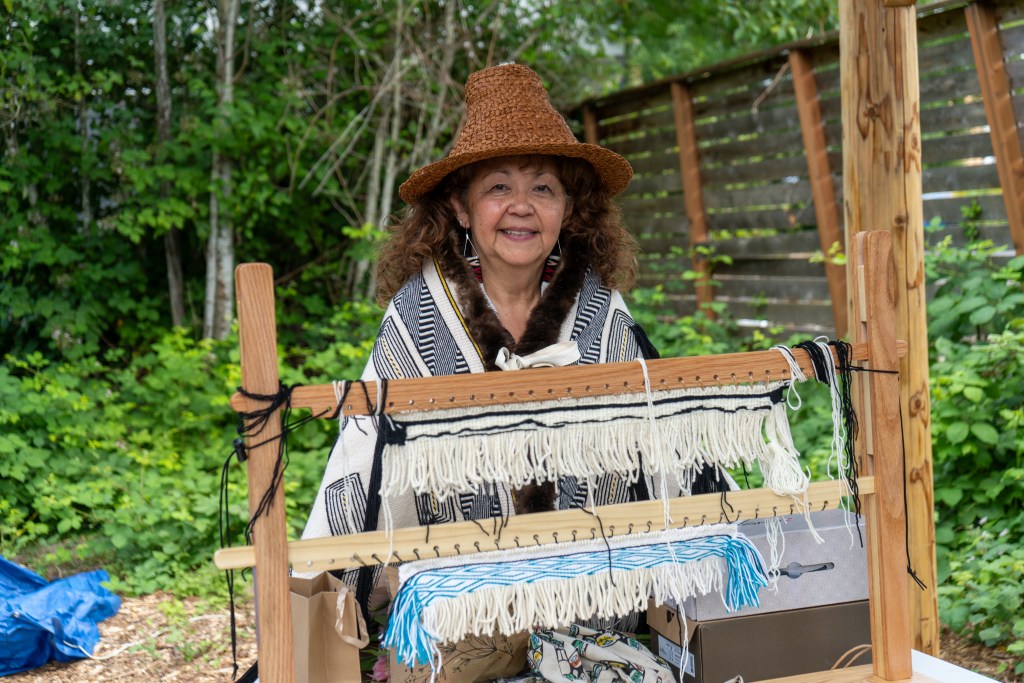
“It’s not part of our everyday life to practice our own culture”
Janice, Dawn, and Ashley all feel the shared trauma of their Indigenous heritage, mourning the languages and traditions that were lost to so many, “It’s not part of our everyday life to practice our own culture” says Ashley. Through Raven’s Tail weaving they hope to connect to the joy and power of their ancestry and celebrate it with their community, “It’s important to know where you come from, right? And so to say that, I feel like I’m reclaiming the heritage and reclaiming our story for my family and my grandma.” The group is not only reclaiming their culture for themselves, but they are sharing their culture through their weaving and the resources they are providing in person and online as part of the Raven’s Tail group. Beyond the weaving group, all three women eagerly seek out opportunities to learn and share their Indigenous heritage, support their community, and honor their ancestors, “I feel like we all we’re doing so much for ourselves, but I think we’re also doing so much for Indian Country, and I think that should be spoken about,” states Ashley. The importance of the group extends beyond the weaving itself and has become an opportunity for women to hold one another up through various life experiences and highlight the strength in community and fellowship which has been the cornerstone of preserving this culture. It was the spark of learning the dance and language of her heritage, that eventually led Dawn to the Raven’s Tail weaving group and inspired her realization, “The thing that I keep coming back to is if it’s not me, who is it? And why not me? It should be me… it takes that initiative I believe that I’ve learned from [Janice] as a shining example of what to do with your culture and reclaim it and bring it back and make it my own.”
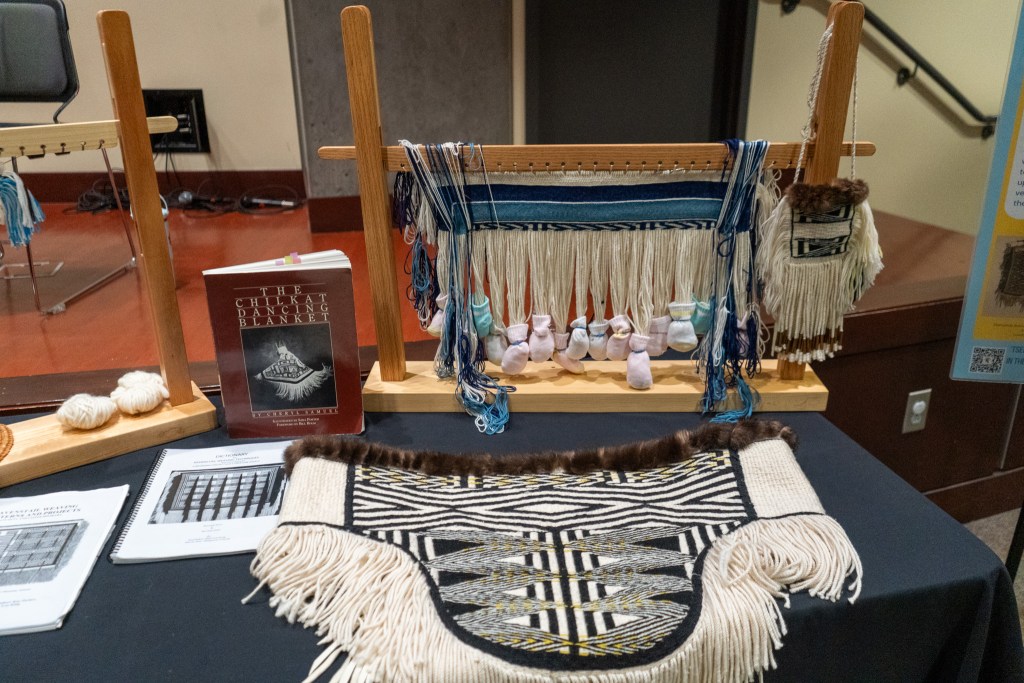
Raven’s Tail Weaving at the By The People: Traditions in Dialogue – Indigenous Pacific Northwest Weaving event in July of 2026