
Washington Iu-Mien Dancers
Beginning as a self-taught dancer in 1997 in a group comprised of only herself and her older sisters, Tracee Saelee is now instructing a group of 35 young Iu-Mien dancers. Founded in 2022 with only a group of 12, Tracee didn’t expect the Washington Iu-Mien Dancers to become what it is today, “When we first started this, I thought it was just going to be a job, but then after spending so much time with all these dancers…we’ve created this big family.” Performing at a variety of events and festivals around Washington, the group showcases the heritage and culture of the Iu-Mien people.
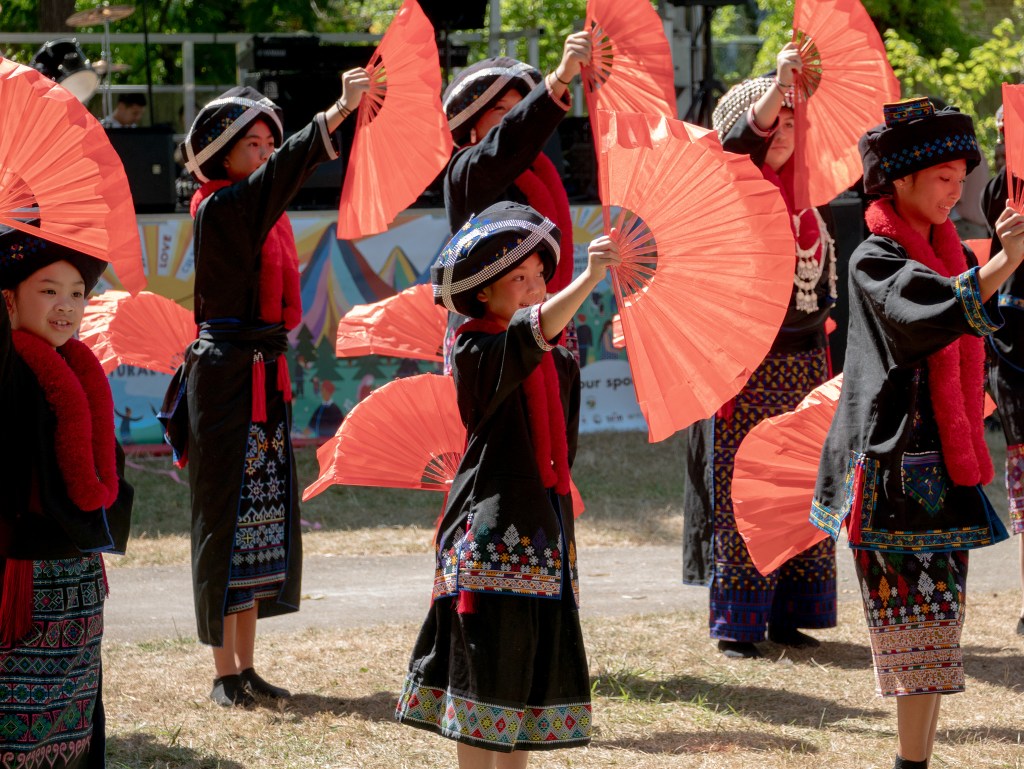
WA Iu-Mien Cultural Festival at Saltwater State Park in Des Moines, WA on August 13, 2023
While the group inspires cultural pride within their own community, they also are sharing their history with people who are not familiar with the Iu-Mien people. With ancestral roots originating in central and southern China, the Iu-Mien ethnic group migrated to what are now Laos, Vietnam, and Thailand. Following the Secret War in Laos, thousands of Iu-Mien families resettled in other countries including the United States, settling primarily along the West Coast. In Washington, Tracee’s family and many other Iu-Mien families settled in South Seattle.

Washington Iu-Mien Festival in Issaquah, WA in August of 2024

While the history, language, and traditions of the Iu-Mien people are not always common knowledge,Tracee and the Washington Iu-Mien Dancers are proud to celebrate their “small but mighty” community through dance. Tracee’s niece and dance apprentice, Audrey, acknowledges the importance of knowing and honoring one’s family history as third generation Iu-Mien, “My grandparents, they fought wars to get here. So, I love telling people when they want to know more, I love telling them about my family.” The Washington Iu-Mien Dancers is truly a generational dance group that is deeply rooted in the idea of family. Two of Tracee’s own children dance in the group, and her niece Audrey, now as a young adult, has moved from the role of dancer to instructor. Many of the instructors were dancers with Tracee back in 1997, dancing in the space next to the community center where the current group practices. “Some of the songs that we’re dancing to and we’re learning about, they danced to when they were younger,” Audrey shares. It’s a full circle moment for Tracee to see that many of the instructors and her sisters, the former dancers in the pictures lining the walls, now have their own children in the group. Tracee speaks of her own mother who also loved to dance, “her daughters are teaching her granddaughters how to dance and to represent the Mien people. I think it’s beautiful for her to see––it’s very rewarding.”

“It’s a family. And that’s what we’ve created. And that’s our culture. And that’s what I love. And I’m very proud that we’ve been able to do that.”
The beauty of the dance group is not only in the sharing of traditions with others but connecting the younger generations of Iu-Mien children with their own heritage. Tracee shares how special it is to see the young people wearing the traditional clothing, speaking the language, and showing their Iu-Mien pride. She is honored to be a proponent of this generational tradition bearing, “That’s what we’re trying to do here…We’re trying to close that gap from old generation to new generation…and hopefully we will be the bridge to close that.” While dance is a medium for cultural connection, is it also an avenue for fun and self-expression for the Washington Iu-Mien Dancers. Tracee instills in her dancers a sense of community rooted in respect for their elders and each other. Many of the dancers address the instructors as aunties and the older dancers as big sister, brother or cousin. The dancers, and often their families, have created strong bonds over shared meals, group chats, and, of course, dance. “It’s a family. And that’s what we’ve created. And that’s our culture. And that’s what I love. And I’m very proud that we’ve been able to do that.”
