
Zje Mongol, Traditional Mongolian Music
Zje Mongol consists of older sister Anu-Ujin Batbaatar and younger twin brothers Temuujin and Temuulin Batbaatar. They play traditional Mongolian music centered around throat singing and the morin khuur, an instrument recognized by UNESCO as an Intangible Cultural Heritage of Humanity and commonly called the “horse-head fiddle.” The morin khuur is a two stringed bow instrument carved in the shape of a horse at the neck. The main strings are traditionally made out of horsehair––one from a mare and the other from a stallion and tuned to B flat and F respectively. Traditional Mongolian music is defined by its themes of interconnectedness with the natural world with songs often praising mountains, animals, or other elements of nature. The music is a symbol of the Mongolian peoples’ intrinsic tie to their environment, their stories, and to each other.

Anu, Temuujin, and Temuulin all started learning traditional Mongolian music from a young age while living in Mongolia. Wanting to carry on the legacy of their grandfather, a famous Mongolian composer, they began lessons in several Mongolian instruments. When the group moved to Seattle in 2019, they transitioned to online lessons focusing on the morin khuur, tovshuur (two-stringed lute), limbe (Mongolian side flute), yochin (Mongolian dulcimer), and khöömii (Mongolian throat singing).

While the group trains in and performs many traditional Mongolian songs, they also write and perform original pieces that reflect some of their contemporary music influences. Although traditional Mongolian music has a specific set of rules and traditions involved, Zje has found that performing in the U.S. has allowed for more experimentation. Citing artists like Jeff Buckley, Jimi Hendrix, Tyler the Creator, and Frank Ocean as musical inspirations, the group has enjoyed the freedom of weaving other genres into their songs such as those found on their original album Celestial.
The unique spirit of Zje also shines through in their instruments. Each member of Zje has custom made instruments that they personally designed to reflect the individuality of each band member. Anu’s horse-head fiddle is carved into a white unicorn wearing silver armor, Temuujin’s horse-head fiddle is designed as a horse surrounded by flames to represent the year of the Fire Horse, and Temuulin’s dulcimer features a leopard and a Phoenix to match his brother, a purposeful choice as they plan to continue their own band when Anu goes to college.

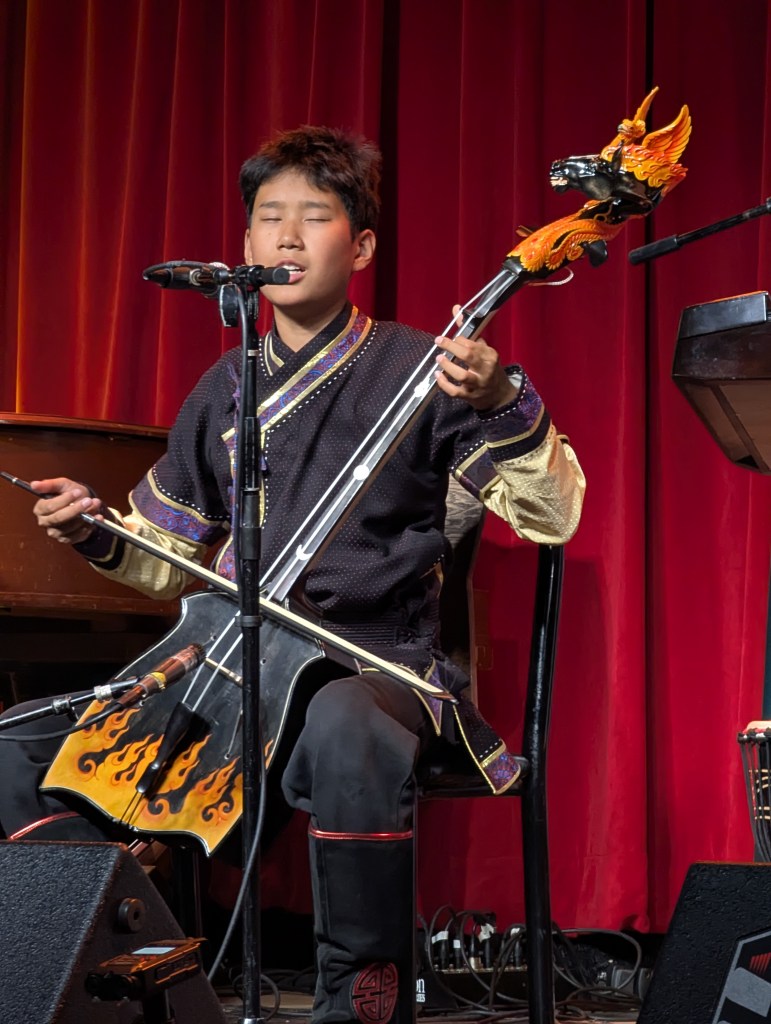
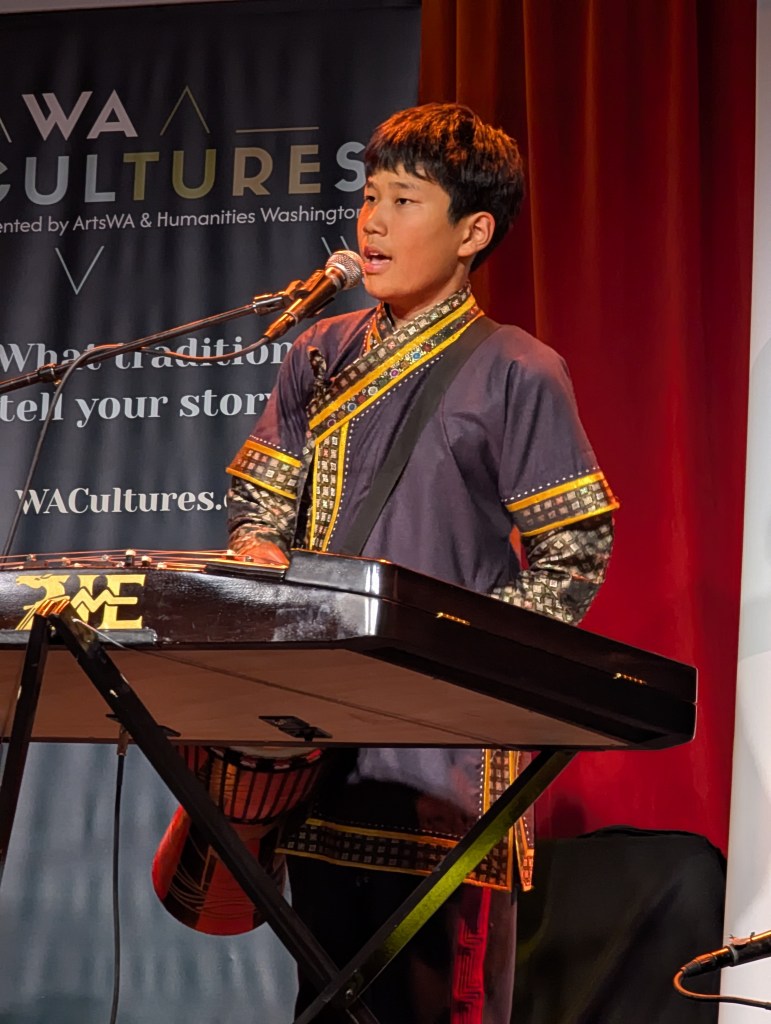
The music of Zje Mongol, though very popular and familiar to the people of Mongolia, is new to many Washington audiences. It has been a unique and special privilege for the band to be able to bring a modern expression of their culture to people across the United States.
Before Anu began her undergraduate studies at Yale University in the fall of 2026, Zje Mongol were invited to participate in the Humanities Washington/ WACultures program By The People: Conversations Beyond 250, a series of community-driven programs created by humanities councils in collaboration with local partners. The initiative was developed by the Federation of State Humanities Councils and the Smithsonian Center for Folklife and Cultural Heritage. This program highlighted Zje Mongol as an underrepresented Asian tradition in Washington State, where both their music and the meanings behind it were explored.Watch the entire program here.